From Intern to Impact: Meet Michael Austin
Bridging the Gap Between the Classroom and a Technology Career
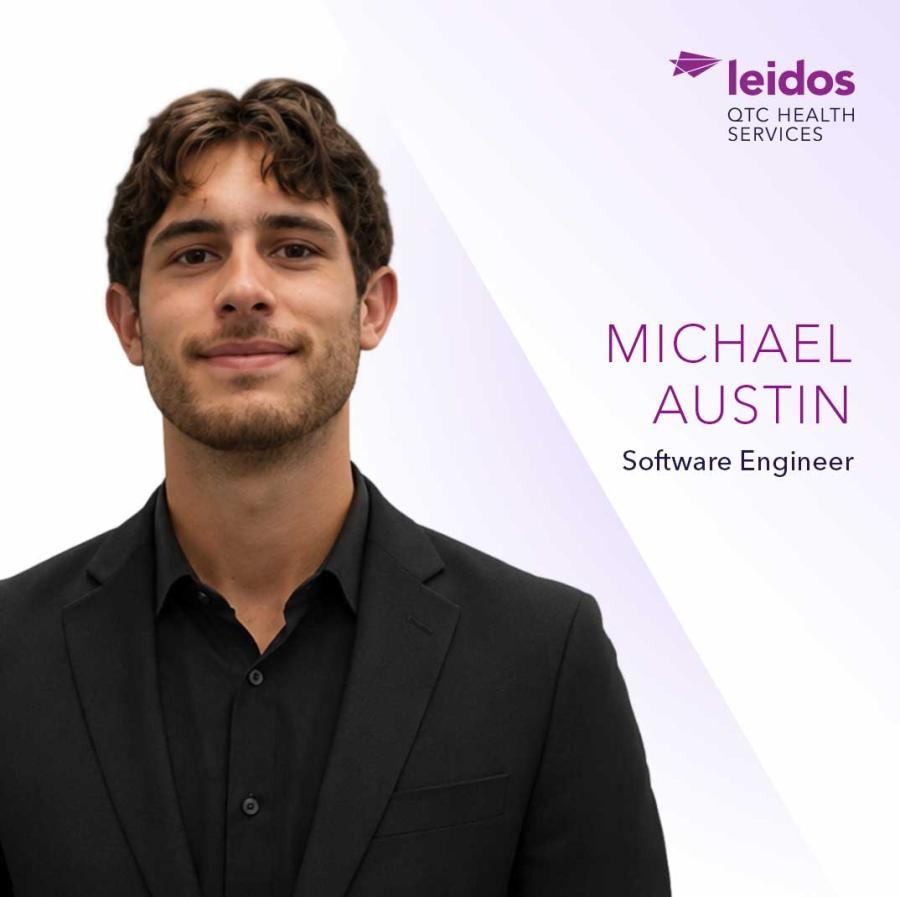
For Michael Austin, an internship at Leidos QTC became the bridge between learning computer science in the classroom and applying those skills to real-world healthcare technology. Originally from San Diego, California, and now based in Orlando, Florida, Austin studied computer science at a small engineering college in southeast Washington State and joined the company as a Systems Developer/Software Engineer intern.
“This internship happened because of a connection I made in college. Someone thought I'd be a good fit for Leidos, so I applied.” After a rigorous interview process, he earned the opportunity to work on tools such as the last tier of ServiceNow and Microsoft Power Apps.
While his coursework provided a strong technical foundation, Austin quickly discovered that software engineering in a business environment required a different way of thinking. He noted, "College teaches you a lot, but it doesn't really prepare you for the business side of software. The languages I use day-to-day are nothing like what I wrote in school—the logic is built around business needs instead of theory, the tools are different, all of it. Here's the thing though: you're going to learn most of what you actually use on the job, not in a classroom.”
Austin reflected on how the staff created an environment where learning came through guidance rather than simply providing answers. “The people here are genuinely great, friendly, supportive, invested in you. What I appreciated most was that they didn't just hand me answers. They'd point me in a direction, drop a hint, and then let me figure the rest out myself,” he said.
Leidos QTC continued investing in Austin by allowing him to work part-time while finishing his final two years of college before extending him a full-time offer. Today, he works full-time as a software engineer, developing front-end and back-end solutions that help information flow seamlessly between the company and providers. While users may only see a simple interface, Austin knows every feature relies on complex engineering behind the scenes.
"We build the back-end systems that let data flow smoothly between Leidos QTC teams and doctor's offices, and we make sure the interfaces are clean and easy to actually use," he said. "Funny enough, the hardest part is sometimes the simplest-looking thing, like a single button. It looks trivial on screen, but there's a mountain of back-end work making that button actually work right."
For students considering an internship with Leidos QTC, Austin encourages them not to hesitate. He stated, "You miss every shot you don't take. Applying costs you nothing, but not applying could cost you some genuinely great experiences. You're going to grow more here than you expect, and beyond the work itself, Leidos QTC actually cares about you as a person.
Launch Your Career with Purpose
Gain hands-on experience, mentorship, and meaningful opportunities through Leidos QTC's paid internships and entry-level programs. Build your skills while making an impact on projects that improve the health and well-being of those we serve.