Bringing Women's Preventive Care Closer to Home
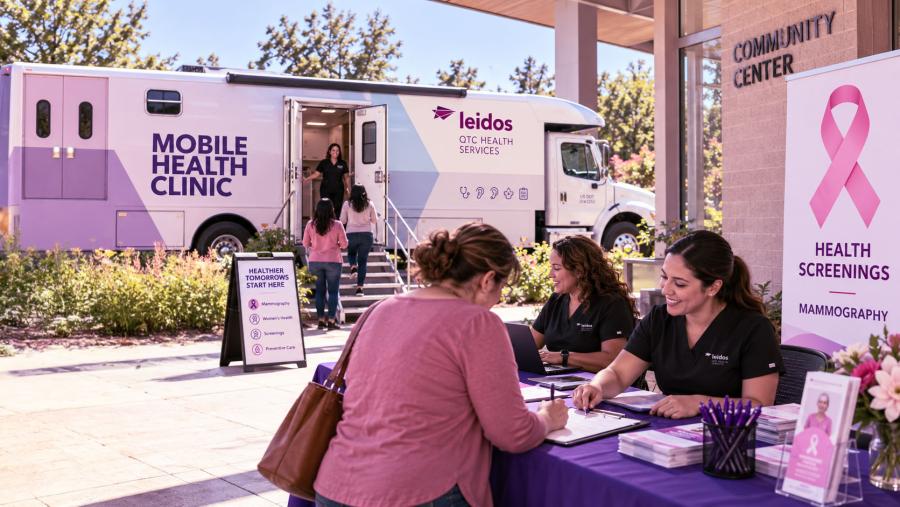
During Breast Cancer Awareness Month, Leidos QTC Health Services announces expanded mobile mammography capabilities to help address barriers to preventive care.
Every October, Breast Cancer Awareness Month highlights the importance of early detection and routine screening. Yet for women living in rural and underserved communities, obtaining a mammogram can mean traveling long distances, navigating limited provider availability or waiting weeks for an appointment.
Leidos QTC Health Services is working to help address these challenges by expanding its mobile healthcare capabilities to include screening mammography as part of its new Women's Preventive Health Initiative.
The initiative is designed to bring essential preventive screenings closer to women in communities where access to healthcare resources may be limited.
“Breast Cancer Awareness Month reminds us that awareness is only part of the equation. Women also need access to the screenings that can help detect cancer early,” said Melanie Krause, senior vice president of Clinical Operations at Leidos QTC Health Services. “By expanding our mobile healthcare capabilities, we're working to reduce some of the barriers that can make preventive care difficult to obtain, particularly for women in rural communities.”
Expanding Mobile Healthcare Capabilities
Leidos QTC has extensive experience supporting healthcare programs that require flexible clinical operations, provider coordination and the ability to serve populations across geographically dispersed locations.
The Women's Preventive Health Initiative builds on that experience by combining mobile clinical services with preventive screening capabilities, including:
- Screening mammography
- Cervical cancer/Pap screening
- Blood pressure screening
- Cholesterol screening
Mobile mammography represents an important addition to Leidos QTC's capabilities, creating opportunities to bring breast cancer screening services into communities where access to imaging facilities may be limited.
While awareness of breast cancer and the importance of early detection remain critical, practical barriers to obtaining screening services can prevent women from receiving timely care. For women in rural areas, those barriers may include lengthy travel times, limited appointment availability and the challenge of balancing healthcare needs with work and family responsibilities.
By bringing screening capabilities directly into communities, mobile healthcare can supplement existing healthcare resources and help make preventive services more accessible.
Building on Experience in Northern Arizona
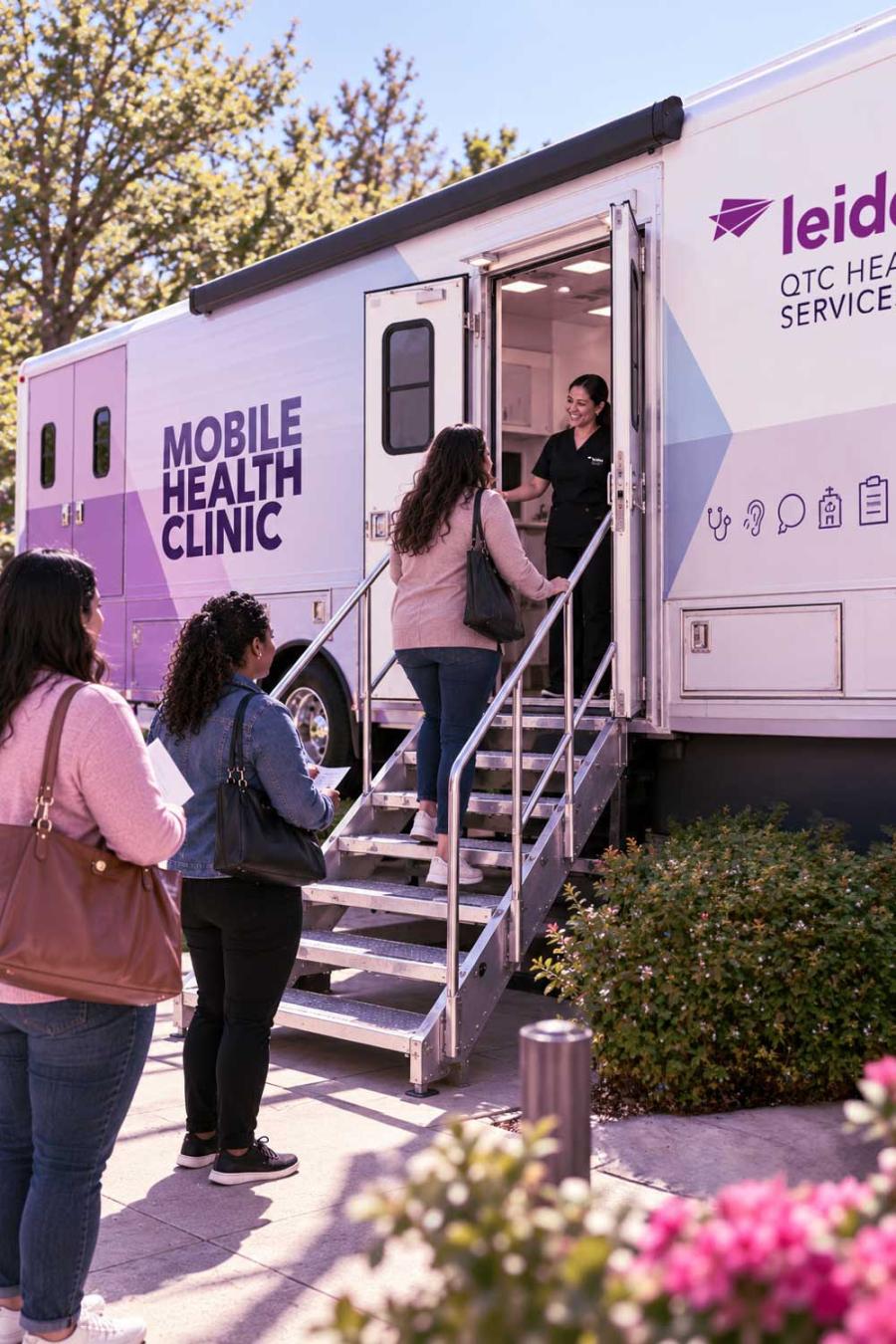
Leidos QTC plans to initially deploy the Women's Preventive Health Initiative in Northern Arizona in 2027, building on its experience providing mobile healthcare services in rural communities across the region.
Northern Arizona presents an opportunity to explore how mobile preventive health services can help address challenges associated with geographic distance, limited local provider capacity and access to specialized screening services.
The planned deployment will also provide an opportunity to work with healthcare organizations and community stakeholders to understand local needs and identify approaches that can help make preventive services more accessible.
“Our experience in mobile healthcare has shown us the importance of adapting services to the communities we're supporting,” Krause said. “The goal isn't simply to bring a mobile clinic into a community. It's to understand where access gaps exist, work alongside local healthcare organizations and create a practical way for more people to receive the care they need.”
The initiative is being developed as a flexible approach that can supplement existing healthcare services, rather than replace them. By coordinating mobile clinical capabilities, screening services and operational support, Leidos QTC aims to help address access challenges in communities where traditional healthcare resources may be limited.
Creating a Model for Broader Access
Although Northern Arizona is planned as the first deployment, Leidos QTC is developing the Women's Preventive Health Initiative as a model that could be adapted for other regions facing similar healthcare access challenges.
The company plans to evaluate the initiative through measures such as the number of women served, screenings completed, communities reached, patient experience and opportunities to reduce travel burdens.
These insights will help inform future deployments and demonstrate how mobile clinical capabilities can supplement existing healthcare infrastructure.
For Leidos QTC, the initiative represents another opportunity to apply its clinical and operational experience to evolving healthcare needs.
“We're looking beyond a single deployment,” Krause said. “We want to learn from this initiative and understand how we can apply the model in other communities where women face similar challenges accessing preventive healthcare. Ultimately, it's about using the capabilities we have to help close gaps in care.”
The Women's Preventive Health Initiative reflects Leidos QTC Health Services' continued focus on developing flexible healthcare solutions that respond to the needs of the populations and communities it serves.
By bringing essential screenings closer to women who might otherwise face significant barriers to care, the initiative aims to make preventive healthcare more accessible—one community at a time.
Related Insights
View more Insights-
 From Internship to Full-Time Impact: Celebrating National Intern Day at Leidos QTC
-
 Behind the Games: Leidos QTC Health Services Volunteers Reflect on a Week of Service at the 2026 National Veterans Wheelchair Games
-
 The Power to Keep Moving: Reflections from Athletes at the 2026 National Veterans Wheelchair Games
